← Writing

Narratives


Printable List

Better Stories Part 4: Character Archetypes
Are students’ characters a bit flat? Archetypes give them a strong foundation on which to build their own characters as well as a tool to analyze existing stories.
A Halloween Costume Gone Wrong
Let’s go roller skating in a Halloween costume! What could possibly go wrong?
Two Animals Switch Biomes
What if a capybara and a kangaroo rat switched homes? Would their adaptations be helpful at all?
Literary Technique: Juxtaposition
Put a grumpy character next to a joyful one and they make each other stand out even more. Opposites are powerful!
Halloween Problems and Solutions
When we try to solve a problem, sometimes we end up creating new problems. Which lead to new solutions. Which lead to new problems.
Better Stories Part 1: The Big Idea
We open our unit on narrative writing with a big idea: “structure increases creativity.” I show how this is true by bringing in examples from across all disciplines.
St. Patrick and Other Legends
How would real people feel about the legends that have been created about them?
Better Stories Part 2: Types of Conflict
If your students’ stories are packed with endless ninja fights or arguments between frenemies, it’s time to expose them to a wider range of conflicts.
Better Stories Part 3: Literary Themes
A typical student narrative includes plot and characters but lacks a larger idea to hold it all together. This is where a lesson on themes comes in…
Elements of The Fantasy Genre
Dig into the common elements of the fantasy genre.
Identifying Author’s Voice
What if… Edgar Allen Poe wrote Alice’s Adventures in Wonderland?
Showing A Character’s Trait
We tell students to “show, not tell” in their writing, but this advice isn’t effective until they experience the difference. In this video, we’ll put a famous character (of students’ choosing) into a mundane situation and develop a fun scene to show off their main traits.
Better Stories Part 5: Plot Structure
Ever read a student’s story that was just event after event after event and then a very sudden ending? They lack an understanding of a plot’s structure. With the help of Finding Nemo, I break down how to set up a well-structured plot.
Change A Story’s Genre
What if we rewrote a story’s climax into a totally different genre?
Bobbing for Apples
Bobbing for Apples
What is bobbing for apples like… for an apple?
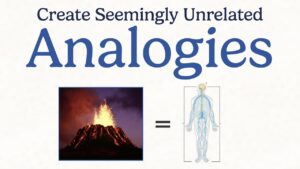
Building Creative Analogies
We’ll take two seemingly unrelated pieces of content (say volcanoes and the human body) and then build analogies to connect the two ideas. In the end, students can create a skit, comic, or story relating the two concepts.