98.5% of members continue subscribing month after month.
How to Filter
Printable List
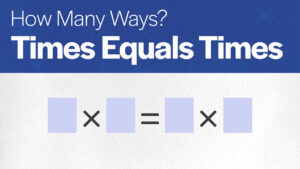
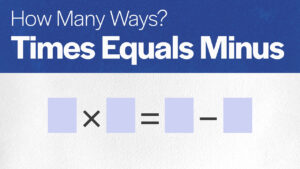
How many different ways can you make this math statement true using only the digits one through nine?
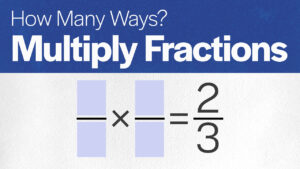
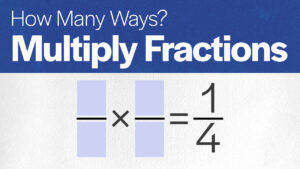
How many different ways can you make this fraction multiplication statement true using only the digits one through nine?
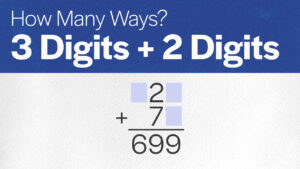
Typical practice problems don’t move students up Bloom’s Taxonomy. With this framework, you’ll see kids stop and really think about how to approach multi-digit addition.
Four sets of 2-digit and 3-digit addition and subtraction practice. But the unknown isn’t where you expect it to be!
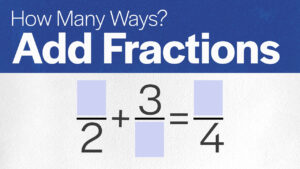
How many different ways can you make this fraction addition statement true using only the digits one through nine?
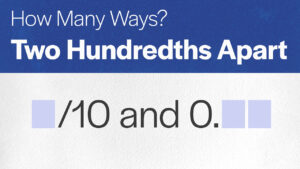
Build a fraction and a decimal that land exactly two hundredths apart.
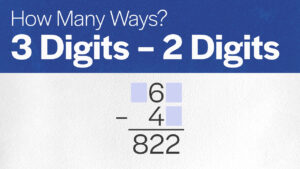
Typical practice problems don’t move students up Bloom’s Taxonomy. With this framework, you’ll see kids stop and really think about how to approach multi-digit subtraction.
Fill in the blanks so two numbers add to exactly 50, using each digit only once. Then find the sneaky ways that start with a zero.
What if you set the stage for students to discover how to multiply fractions?
Who can get to 100 first in this simple, but delightful, math game?
The North Pole hits -40°. The South Pole hits -60°. Calculate the averages, graph the data, and deliver your polar weather report.
Four blanks, ten digits, one target. Students hunt for every pair of two-digit numbers that adds to 170 without repeating a digit, then work out why there are only four.
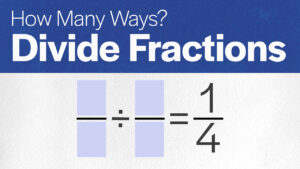
How many different ways can you make this fraction division math statement true using only the digits one through nine?
Place value is something we cover in elementary school. It seems simple, but I’d wager that very few adults really understand the topic. I sure didn’t until I worked with non-base-10 number systems in college. Your students can get a taste of this mind-boggling experience by imagining what it would be like if we didn’t have the number 9. What would each digit represent then?
One equation, digits one through nine, and a hunt for the smallest possible answer.
Ready for a tricky counting and divisibility game?
You’ve got 60 spaces on a grid to create an amusement park, a house, a farm, or whatever you’d like. Divide it into seven pieces, order it by size, combine into two halves, and more in this fraction project.
In these math problems, the solution is already given. But another number is missing!
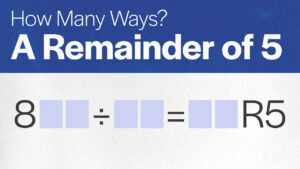
Fill in the blanks so the division leaves a remainder of exactly 5.
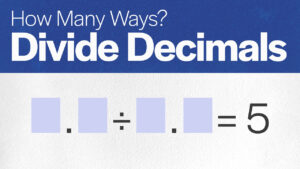
Fill in the blanks so a division comes out to exactly 5.
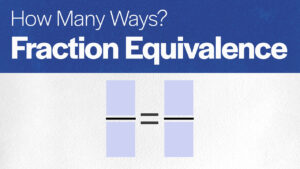
When fractions take on a new denominator, it’s as if they’re wearing a disguise – same value, new look. So let’s write a story about fraction equivalence starring a fraction who needs to fit in with a new group.
You only have six digits to form three fractions. Can you combine them to get to 0?
One equation. Digits one through nine. How many ways can you make it work?
What could we possibly do to make rounding more interesting for students who already get it? In this series, students consider how they might round to values other than “the nearest 10.” How, for example, do we round to the nearest 9? 7? 15?
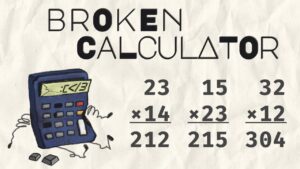
This calculator multiplies almost correctly. Students will find the one step it skips.
What if you had an original iPod and sold it compared to if you had bought the equivalent amount of Apple stock and sold that?
What does it look like to multiply fractions?
When we’re adding and subtracting, do evens make odds into evens? Do odds make evens odd? Which one has… more power!?
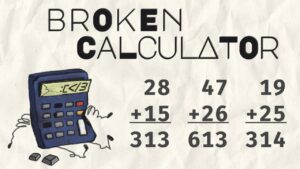
This calculator adds two-digit numbers wrong, the same way every time. Crack the rule, then predict its next mistake.
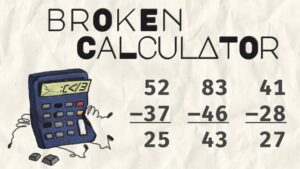
This calculator gets subtraction wrong the same way every time. Can your students crack its broken rule?
Have you ever wondered what it looks like to divide by a fraction, man?
Decimals are the same distance apart. But one pair rounds together and the other splits. Why?
How fast do you get your mathematical car going without crashing?
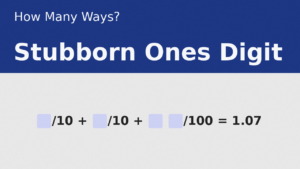
Three fractions must add to exactly 1.07.
Design and furnish hotel rooms on a budget. Real math, real constraints, real decisions. Then pitch your hotel to investors.
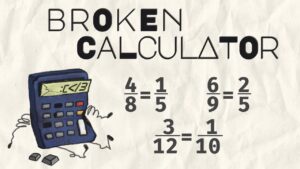
This calculator simplifies fractions with a rule that sometimes works. What is it doing wrong?
What if we took a fraction apart, then took those pieces apart, then recombined them, and then recombined those, arriving back to the original fraction?
What if we played Tic-Tac-Toe with numbers and instead of three-in-a-row, we add up to 15? Well… then we’d have Number Scrabble!
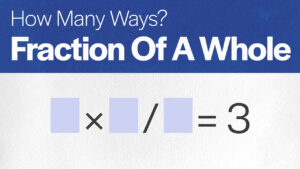
A whole number times a fraction has to equal exactly 3. Which digits work?
Which set of fractions would be the trickiest to order from least to greatest? Let’s have a tournament!