


Playlist: Bookmarks

Getting Specific With St. Patrick’s Day Writing
Let’s take a starting phrase about St. Patrick’s Day and get specific. No, even more specific!

Words Within Words: SCARECROW
How many words can you find within “scarecrow”?

Shift Cipher (Codes Part 1)
Let’s encode and decode secret messages like Julius Caesar!

Prefixes and Suffixes in Other Languages
Let’s go beyond merely memorizing word parts and instead analyze across languages. How do other languages make a word the opposite?

Lipogram: Rewrite “Twinkle, Twinkle”
What if we rewrote a piece of writing without using certain letters?

Categorize and Re-Categorize Animals
Put these animals into groups. Then do it again. Then… do it one more time. How does re-re-grouping the same creatures reveal new patterns and give new insights?

Thanksgiving Photo Writing
Starting with an old-timey photo, students will write from a particular item’s point of view.

Not Like The Others: Penguins
Four penguins. One doesn’t belong. But which one? That depends on your argument.

Greek and Latin Word Part Paths
How can we go from Biology to Immobile?

Antonym Paths
Does the antonym of an antonym bring us back to the same meaning?
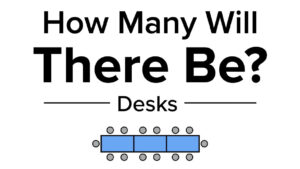
How Many Will There Be? Desks
Give kids a taste of a sequence, let them build an understanding, and then see how far their predictions can take them.

Notice, Wonder: Green Circles
A mysterious image. Reveal it slowly. Let your students wonder!

Inferring With Art: A Man
What’s going on in this painting? Who is that guy? What’s his job? And where’s his other boot?

Inferring With Art: A Couple
What’s going on in this room? There are shoes everywhere! Are those… oranges? Let’s make some inferences!

Inferring With Art: Two Women
What are these two women up to? What’s that thing she’s holding? Let’s make some inferences!
Writing Technique: Triple Anadiplosis!
Have students mastered the art of anadiplosis: ending one sentence with the beginning of the next? Now it’s time to take it to the next level!

Doubling Up Writing: Anadiplosis
Repeating words can be what you want, if what you want is an interesting effect. (Psst, that’s an example of anadiplosis!)

Fixing Shakespearean Run-Ons
Can your students help The Bard? We’ll fix five Shakespearean run-ons in three different ways.
Writing A Thanksgiving Letter
What if an inanimate object could express thanks for a special person in your life? What would it write?

Generalization: Change Leads to More Change
Can you think of a time in your life when “Change lead to more change?”
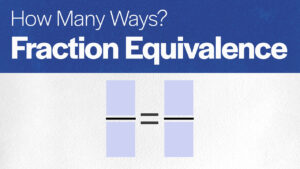
How Many Ways: Fraction Equivalence
How many different ways can you make this math statement true using only the digits one through nine?

What’s In My Brain: Painting vs Painting
Two columns of sentences. Something is different about them. Can you figure out the rule?

What’s In My Brain: Cute Baby vs Fast Cheetah
Can students spot similes vs metaphors?

Writing A Story About Fraction Equivalence
When fractions take on a new denominator, it’s as if they’re wearing a disguise – same value, new look. So let’s write a story about fraction equivalence starring a fraction who needs to fit in with a new group.

Intersecting Angles and Streets
There can never be just one angle.

Upgrade Research Questions With Depth and Complexity
Ever ask students to create research questions? Were their ideas a bit… blah? My own students had a very hard time writing questions they didn’t already know the answer to! This video is how I solved that problem: upgrade research questions with depth and complexity.

Student Introductions With Depth and Frames
Want to introduce the tools of Depth and Complexity and learn more about your students and introduce the Frame graphic organizer? Have I got the activity for you!

Paradox: The Liar’s Paradox
Nothing like a paradox to get your kids brains exploding 🤯! This one starts with five simple words: “This statement is a lie.”

The Angles of a Triangle
Why tell a kid the rules of a triangle when they can discover them!?

Deducing the Area of Triangles
Using patterns, students try to deduce where that area formula came from.
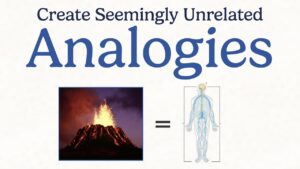
Building Creative Analogies
We’ll take two seemingly unrelated pieces of content (say volcanoes and the human body) and then build analogies to connect the two ideas. In the end, students can create a skit, comic, or story relating the two concepts.

Synonym Graphs
So, which is happiest: happy, joyful, or ecstatic? Which is most temporary?

Passive to Active Voice
In this lesson, students will not just fix passive sentences, but break active sentences as they learn to put the star of the sentence first.

The Thinking Hats
So… do your students moan when forced to work in a group? Part of the problem is that lack the structure to work well with peers. Edward de Bono’s Thinking Hats are a perfect tool to help with this problem.

A Donut Investigation
In this cross-curricular investigation, students will look into an intriguing question: do donuts or salads have more sugar? They’ll grapple with misleading information, bias, and use their math skills to create a visual representation of sugar in popular foods.

Multiple Meaning Matcher – Introduction
Your students will try to match up definitions that belong to the same homophone in this brain-boggling vocab puzzle.

Improving Presentations 4: The Big Day
How do you mentally (and emotionally) prepare yourself for the big day?

Improving Presentations 3: The Storyboard and Slides
It’s time to turn that outline into a storyboard and then some actual slides.

Analyze and Create Misleading Graphs
Let’s make some intentionally bad graphs to learn how to spot poorly made graphs.

Greekymon
Rather than just memorizing word parts, students will use those word parts to create four possible products.

Motivation and Moral Development
Can someone do the right thing, but for the wrong reason?

Creating A Classroom Motto
Starting with specific examples of fantastic classroom behavior, your class will end up with one sentence summing up their expectations. It’s a classroom motto!

Writing Summaries in Haiku
Let’s write a summary. A very short summary. With VERY strict rules.

Teach Non-Fiction Writing Structure With Fractals
Did you ever notice that the structure of an essay is very similar to the structure of a paragraph? Hmm…

Greek and Latin Dinosaur Names
Let’s create a new dinosaur using Greek and Latin stems!

Better Stories Part 3: Literary Themes
A typical student narrative includes plot and characters but lacks a larger idea to hold it all together. This is where a lesson on themes comes in…