


Playlist: Bookmarks

Concept Formation
For TeachersA model of instruction that moves from specific examples to concepts to one big idea.

Tournament of Not-So-Famous Inventors
Which inventor and invention will win the tournament?

Comparing Characters’ Bedrooms
What item’s in a character’s bedroom would reflect their deepest desires? And what if they toured a similar character’s room?

Updating Old Questions: Pay Raise
For TeachersHow I’d update a low-level, overly engaging math question.

A Halloween Costume Gone Wrong
Let’s go roller skating in a Halloween costume! What could possibly go wrong?

Squiggles Introduction
What do you see in this squiggle?

Squiggles Collection 1
Everyone starts with the same squiggle. No two drawings end up the same. What do you see?

Phrases to Join a Discussion
Want your classroom discussions to go a bit more smoothly? Train students to use a few simple phrases and it’ll make all the difference in the world.

Thanksgiving Photo Writing
Starting with an old-timey photo, students will write from a particular item’s point of view.

Stories with the Same Problems and Solutions
Have you ever noticed that some stories have awfully similar problems? What if we looked for the most unusual way of solving a repeating problem?

Find The Pattern: Multiply Fractions
What if you set the stage for students to discover how to multiply fractions?
Making Depth and Complexity Posters
Why buy premade posters when you can show off your students’ thinking about Depth and Complexity?

Writing Concept Attainment Lessons
For TeachersIn a Concept Attainment lesson, we give students examples and non-examples of a concept — without telling them what that concept is!

Notice, Wonder: Bloom
A mysterious image. Reveal it slowly. Let your students wonder!

Tournament: 8 Wonders of the Solar System
Which location is the most wondrous place in the solar system?

Tournament of Ancient Inventions
Which of these inventions of the ancient world is most influential? Least useful today? Most taken-for-granted?

Building Creative Confidence with the Torrance Tests
For TeachersHere are a bunch of ways to quickly practice creativity with your students for zero dollars.

New Uses for a Paperclip
So what are some new ways to use a paperclip?

Looping Grid Art
Pick a few numbers, draw some corresponding lines on grid paper, and you’ll end up with some interesting, looping math-y art!

Ultimate (or Inception) Tic Tac Toe
What if each square on a Tic-Tac-Toe board had another Tic-Tac-Toe board inside of it?

Notice, Wonder: An Orange Thing
A mysterious image. Reveal it slowly. Let your students wonder!

Developing Questions that Prompt Thinking in Math
For TeachersMath is a particularly tricky subject for asking higher-level questions. Here are a couple of techniques I’ve used to prompt students to think, not merely calculate.

The Pros and Cons of Producers and Consumers
Sure, students might know the difference between a producer and a consumer… but have they considered how they feel about each other? What, in a producer’s opinion, are the pros and cons of a consumer?
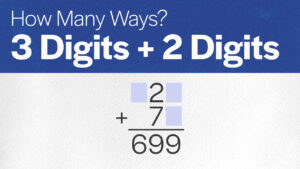
Addition: 3 Digits Plus 2 Digits (Multiple Solutions)
Typical practice problems don’t move students up Bloom’s Taxonomy. With this framework, you’ll see kids stop and really think about how to approach multi-digit addition.
Writing A Thanksgiving Letter
What if an inanimate object could express thanks for a special person in your life? What would it write?

Holiday vs Holiday (from a Mascot’s Perspective)
Want something to do during the holiday season that is both fun and involves thinking? Get students writing about what a snowman would think about Halloween or what a ghost would think about Thanksgiving.

Numerator or Denominator: Which has more power in a fraction?
What do you do with students who already get their fraction operations? Give them a contrived project about recipes or pizza slices? Make them solve annoyingly hard practice problems? Please. Here, we get students thinking in a whole new way, pondering which has more power, the numerator or denominator.

Depth and Complexity – An Introduction for Teachers
For TeachersDepth and Complexity is the most powerful framework most teachers have never heard of. Here’s what it actually is — and isn’t.
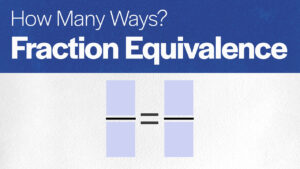
How Many Ways: Fraction Equivalence
How many different ways can you make this math statement true using only the digits one through nine?

Notice, Wonder: Turbine
Your students will be surprised by the size of this turbine… and by what’s hanging from it!

Upgrade Research Questions With Depth and Complexity
Ever ask students to create research questions? Were their ideas a bit… blah? My own students had a very hard time writing questions they didn’t already know the answer to! This video is how I solved that problem: upgrade research questions with depth and complexity.

Calculators, Patterns, and Multiplying By Decimals
Before teaching students the procedure for multiplying with decimals, how much can they intuitively glean from a structured play session with calculators?

The Resiliency Tournament
Your students will set up a tournament to determine which person or character best demonstrated resiliency.

Grouping Quadrilaterals In A Hierarchy
Can we classify quadrilaterals like we classify living things?

More Specific than “Smart”
When students are told that they’re “smart”, what does this word actually mean to them? (Psst. It isn’t what we intended.)

Passive to Active Voice
In this lesson, students will not just fix passive sentences, but break active sentences as they learn to put the star of the sentence first.

The Thinking Hats
So… do your students moan when forced to work in a group? Part of the problem is that lack the structure to work well with peers. Edward de Bono’s Thinking Hats are a perfect tool to help with this problem.

Multiple Meaning Matcher – Introduction
Your students will try to match up definitions that belong to the same homophone in this brain-boggling vocab puzzle.

Improving Presentations 4: The Big Day
How do you mentally (and emotionally) prepare yourself for the big day?

Improving Presentations 3: The Storyboard and Slides
It’s time to turn that outline into a storyboard and then some actual slides.

Improving Presentations 2: Planning The Outline
After watching some great presenters, let’s outline your presentation!

Improving Presentations 1: Watching The Greats
Get better at giving presentations by studying the greats!

Analyze Character Change with Depth and Complexity
Your students will use Depth and Complexity to note how a character’s main trait changes across a story.

How to Play Go
Ready to learn a 2,500-year-old Chinese board game? Let’s… Go!

Ways to Start a Sentence – Part 3
Your students’ sentences all start the same way. Here are three techniques that fix that overnight.

Ways to Start a Sentence – Level 2
We’ll show students how to add more variety to their writing by starting sentences with a reason, a prepositional phrase, and a simile.

Ways to Start a Sentence – Level 1
‘Add more variety!’ teachers say. But how? This lesson gives students actual techniques instead of vague advice.

Greekymon
Rather than just memorizing word parts, students will use those word parts to create four possible products.

Students and Personality Types
For TeachersHow can our students be so different? And how can we help them to understand themselves and each other better.

Asynchrony: Developing At Different Rates (For Students)
For students! In some areas, a student may be shockingly advanced, while in others… surprisingly average. This is asynchrony in action.

Motivation and Moral Development
Can someone do the right thing, but for the wrong reason?

Creating A Classroom Motto
Starting with specific examples of fantastic classroom behavior, your class will end up with one sentence summing up their expectations. It’s a classroom motto!

Writing Summaries in Haiku
Let’s write a summary. A very short summary. With VERY strict rules.

A Grid-Based Fraction Project
You’ve got 60 spaces on a grid to create an amusement park, a house, a farm, or whatever you’d like. Divide it into seven pieces, order it by size, combine into two halves, and more in this fraction project.

Impostor Syndrome
For TeachersThe student who breezes through school may hit a wall in college. Here’s why — and what to do about it now.