Grade 6
-
Language
-
Reading: Informational
-
Reading: Literature
-
Speaking & Listening
-
Writing
CCSS ELA Standard: 6.W.5
With some guidance and support from peers and adults, develop and strengthen writing as needed by planning, revising, editing, rewriting, or trying a new approach.
Writing Haiku in Primary
Your youngest students will learn to write Japanese Haiku poetry.

That Quote’s Not Quite Right: Albert Einstein
When I see a quote, I often think, “That’s not quite right!”

Improving Shakespeare’s Repetition
Let’s help William Shakespeare with his use of repetition.

Getting Specific With St. Patrick’s Day Writing
Let’s take a starting phrase about St. Patrick’s Day and get specific. No, even more specific!

Order, Chaos, and the Holiday Season
Let’s write a holiday song about order and chaos!

Mother’s Day Cards
Let’s write the cleverest Mother’s Day cards you’ve ever seen!
Super Specific Similes – Strong Uncle
Let’s make this simile about a strong uncle even more specific.

A Halloween Costume Gone Wrong
Let’s go roller skating in a Halloween costume! What could possibly go wrong?

Super Specific Similes – Slimy Broccoli
Start with a basic simile. Now make it more specific. Now even more. Watch how much better writing gets with each round.
Super Specific Similes: Stinky Seaweed
Start with a basic simile. Now make it more specific. Now even more. Watch how much better writing gets with each round.

Think Like An Author: Hemingway vs Dickens
What if your students rewrote Dickens in the style of Hemingway and vice versa?

Holiday Writing: Packing Crates
An old photograph. A holiday scene. Pick one object in the picture and write from its point of view.

Back to School: Rewriting The Beatles’ “Help!”
Can your students come up with a one-syllable word to sum up their time away from school? And then rewrite The Beatles’ song Help!?

Writing About Art: Burning of the Houses of Lords and Commons
Look closely at Burning of the Houses of Lords and Commons. What do you notice? Now turn those details into a poem you didn’t know you could write.

Writing About Art: Impression, Sunrise
Look closely at Impression, Sunrise. What do you notice? Now turn those details into a poem you didn’t know you could write.

Writing in Pilish
Pi can go beyond circles! What if you wrote using the digits of pi as your guide?

Writing About Art: Chōshi in Shimosha
Get your students writing some pretty darn impressive poetry based on Japan’s most famous artist.

Writing About Art: Wanderer Above the Sea of Fog
Look closely at Wanderer Above the Sea of Fog. What do you notice? Now turn those details into a poem you didn’t know you could write.

Writing About Art: Twilight in the Wilderness
Look closely at Twilight in the Wilderness. What do you notice? Now turn those details into a poem you didn’t know you could write.

New Uses for a Paperclip
So what are some new ways to use a paperclip?

Fancier Figurative Language: Use the Opposite
Let’s start with “As cold as fire.”

Fancier Figurative Language: Move the Simile
What if we started a sentence with the simile?

Writing About Art: The Scream
Your students will turn the iconic painting The Scream into a vivid, sensory poem.
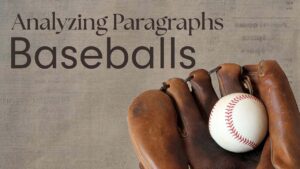
Analyze Paragraphs: Baseball
Three paragraphs about baseball. They all cover the same topic — so what makes each one different? Now combine them into one super-paragraph.
Analyze Paragraphs: Cucumbers
Three paragraphs about cucumbers. They all cover the same topic — so what makes each one different? Now combine them into one super-paragraph.
Analyze Paragraphs: Empire State Building
Three paragraphs about the Empire State Building. They all cover the same topic — so what makes each one different? Now combine them into one super-paragraph.
Analyze Paragraphs: Tomatoes
Three paragraphs about tomatoes. They all cover the same topic — so what makes each one different? Now combine them into one super-paragraph.
Analyze Paragraphs: Wolverines
Three paragraphs about wolverines. They all cover the same topic — so what makes each one different? Now combine them into one super-paragraph.

Writing Sample: Alice’s Adventures in Wonderland (Falling)
A passage from Alice’s Adventures in Wonderland to use as a mentor text, discussion starter, or writing prompt.

Writing Sample: Alice’s Adventures in Wonderland (Shrinking)
A passage from Alice’s Adventures in Wonderland to use as a mentor text, discussion starter, or writing prompt.

Writing Sample: The Velveteen Rabbit (The Toys)
A passage from The Velveteen Rabbit to use as a mentor text, discussion starter, or writing prompt.

Writing Sample: White Fang (The Wild)
A passage from White Fang to use as a mentor text, discussion starter, or writing prompt.
Writing A Thanksgiving Letter
What if an inanimate object could express thanks for a special person in your life? What would it write?

Remixing A Holiday Poem
Let’s take a classic Christmas poem and remix it to work with another holiday!

Fancier Figurative Language: Advanced Repetition
Is your students’ use of repetition limited to, “The girl was very, very, very fast.”? Let’s borrow some ideas from Shakespeare!

Writing Sample: The Wind in the Willows
A passage from The Wind in the Willows to use as a mentor text, discussion starter, or writing prompt.

Writing Sample: Peter Pan
A passage from “Peter Pan” to use as a mentor text, discussion starter, or writing prompt.

Writing Sample: The Fall of the House of Usher
A passage from “The Fall of the House of Usher” to use as a mentor text, discussion starter, or writing prompt.

Writing Sample: Anne of Green Gables
An intriguing passage from Anne of Green Gables to use as a mentor text, discussion starter, or writing prompt.

Describing Author’s Voice
What if… Edgar Allen Poe wrote Alice’s Adventures in Wonderland?

“Its Big Day” – A Children’s Story About Its and It’s
Let’s spice up a typically dull lesson about the difference between “its” and “it’s” by asking students to write a children’s story about the adventures of a critter named It.

Fancier Figurative Language: Start with a Cliche
We’ll start with the cliché “as cold as ice” and go somewhere much more interesting.

Writing Clear Directions
Can you write directions so clear that a group of kids can put a toy together with no illustrations?