


Playlist: Bookmarks

Comparing Characters’ Bedrooms
What item’s in a character’s bedroom would reflect their deepest desires? And what if they toured a similar character’s room?

Go Beyond “Identify Figurative Language”
For TeachersSo students can identify a simile, metaphor, and hyperbole. What next?

New Uses For A Cardboard Tube
So, what can a cardboard tube be used for other than holding wrapping paper?

What’s In My Brain: Crocodile vs Tree Frog
Is it a reptile or an amphibian?

Greekymon Studies – Round 1
What might a creature named “Ursolunascope” be like?
Parts of Speech Party: Introduction (Check)
How many ways can we use “check” in a paragraph? And can your students spot when it’s a verb, or a noun, or an adjective?
Super Specific Similes – Strong Uncle
Let’s make this simile about a strong uncle even more specific.

Pig Pen Cipher (Codes Part 2)
Let’s encode some secret messages with a cipher that was actually used during the American Civil War!

Think Like An Author: Hemingway vs Dickens
What if your students rewrote Dickens in the style of Hemingway and vice versa?

Analyze Suffixes: -en
What exactly does adding -en to a word do? Find the pattern. Then find the words that break it.

Geometry Image: Skytree
What odd and interesting shapes can your students find in this geometric image?

Notice, Wonder: A House
A mysterious image. Reveal it slowly. Let your students wonder!

Concept Attainment: Hornet vs Tiger
Can your class spot the vertebrates vs invertebrates?

Not Like The Others: Types of Diseases
Four diseases. One doesn’t belong. But which one? That depends on your argument.

Fancier Figurative Language: Move the Simile
What if we started a sentence with the simile?
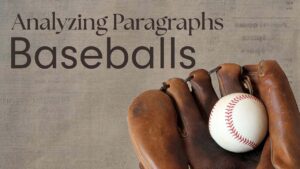
Analyze Paragraphs: Baseball
Three paragraphs about baseball. They all cover the same topic — so what makes each one different? Now combine them into one super-paragraph.

Self Portraits Part One: Line Drawings
Anyone, yes anyone, can create a (somewhat) realistic self-portrait using these steps. Anyone!

Measurement: An Elephant
What if I told you that an elephant weighed a back-breaking 176,000? Could you figure out the unit I’m using? But… how many corgis would that be?
Changing Coordinating Conjunctions
What happens when we switch out a “but” with a “so”? An “and” with a “for”? How can such tiny words make such big differences?

Doubling Up Writing: Anadiplosis
Repeating words can be what you want, if what you want is an interesting effect. (Psst, that’s an example of anadiplosis!)

Fixing Shakespearean Run-Ons
Can your students help The Bard? We’ll fix five Shakespearean run-ons in three different ways.

Writing Technique: 3 Dependent Clauses
A specific technique to help students add some spice to their writing. We’ll be writing sentences with three dependent clauses.

Writing Technique: Contrast With Synonyms
A specific technique to help students add some spice to their writing. We’ll be contrasting two ideas using synonyms.

Writing Sample: Alice’s Adventures in Wonderland (Falling)
A passage from Alice’s Adventures in Wonderland to use as a mentor text, discussion starter, or writing prompt.

Ambiguous Sentences
Rather than just demand that students “write clearly,” we’ll explore the hazards of poorly written sentences… and maybe create one of our own!

SCAMPER: Scaffolding Creativity
Asking students to “think creatively” won’t get you far. They won’t know how to start, they’ll get stuck with simple ideas, or they’ll just go completely wild. SCAMPER is a tool for scaffolding the process of creativity.

Plurals: An Inductive Spelling Lesson
Plural nouns in English are deliciously fascinating. Yet most plural lessons are so dull! In this experience, students are given a pile of plurals and then inductively create groups and pull out rules and patterns.

Paragraphs: Systems of Sentences
Blow up a paragraph into individual sentences. Now reassemble it. The clues hiding in each sentence will surprise you.

Advanced Alliteration and Consonance
When students learn about alliteration, it’s hard to steer them away from goofy tongue-twisters. Certainly, there must be more powerful and practical ways of using alliteration. In this lesson, I draw on delicious examples from Shakespeare to show how a very advanced writer used alliteration. Then, I break those ideas down so students can try them out.

What’s In My Brain: Cute Baby vs Fast Cheetah
Can students spot similes vs metaphors?

Same Perimeter, Different Area For Rectangles
Can two rectangles have the same perimeter but… different areas!?

Upgrade Research Questions With Depth and Complexity
Ever ask students to create research questions? Were their ideas a bit… blah? My own students had a very hard time writing questions they didn’t already know the answer to! This video is how I solved that problem: upgrade research questions with depth and complexity.

Undoing Multiplication With Division
Multiplication and division, natural foes, are constantly seeking to undo each other. Students will attempt to reverse the effects of multiplication by dividing once, twice, or even thrice!

Simple or Compound Sentences – What’s In My Brain?
Can your students spot simple sentences vs compound sentences?

Run On or Not? – What’s In My Brain
Can your students spot the run-on sentences?

Investigating Christmas Trees
Start with facts about Christmas trees. Group them. Label them. Can you boil it all down to one big idea?

Student Introductions With Depth and Frames
Want to introduce the tools of Depth and Complexity and learn more about your students and introduce the Frame graphic organizer? Have I got the activity for you!

Paradox: The Liar’s Paradox
Nothing like a paradox to get your kids brains exploding 🤯! This one starts with five simple words: “This statement is a lie.”

Grouping Quadrilaterals In A Hierarchy
Can we classify quadrilaterals like we classify living things?

Upgrading Compare and Contrast Writing
Upgrade compare and contrast writing with just a couple of key words.

Doubling Dollars
Say you have a dollar. Say you can double that dollar each day: $1, $2, $4, and so on. How long will it take to reach… one million dollars? Not as long as you might think!

Depth and Complexity: 📈 Trends
Has something been changing recently? What might be causing that? What are the effects?

Depth and Complexity: ❓ Unanswered Questions
This underutilized tool focuses students on what we don’t yet know and even what we can’t know.

Depth and Complexity: 🏛️ Big Idea
Let’s get students thinking big and focusing on more abstract ideas.

Depth and Complexity: 👓 Multiple Perspectives
Every topic looks different depending on who’s looking. This prompt teaches students to see through someone else’s eyes.

“Its Big Day” – A Children’s Story About Its and It’s
Let’s spice up a typically dull lesson about the difference between “its” and “it’s” by asking students to write a children’s story about the adventures of a critter named It.

How Many Students Can Fit On The Playground?
So… just how many kids could we cram onto the playground?

A Grid-Based Fraction Project
You’ve got 60 spaces on a grid to create an amusement park, a house, a farm, or whatever you’d like. Divide it into seven pieces, order it by size, combine into two halves, and more in this fraction project.

An Inductive Exploration Of Geometry
For TeachersWith inductive thinking, students will work from parts to whole, discovering big ideas along the way!

Response to Lit: An Inductive Approach
For TeachersHere’s how one teacher uses inductive thinking to help students respond to literature.

Engineering: Build A Bridge
Using real bridges as their starting point, students will construct bridges out of straws and paperclips.