


Playlist: Bookmarks

Two Animals Switch Biomes
What if a capybara and a kangaroo rat switched homes? Would their adaptations be helpful at all?
Halloween Problems and Solutions
When we try to solve a problem, sometimes we end up creating new problems. Which lead to new solutions. Which lead to new problems.

Change A Story’s Genre
What if we rewrote a story’s climax into a totally different genre?

Order, Chaos, and the Holiday Season
Let’s write a holiday song about order and chaos!

Bobbing for Apples
What is bobbing for apples like… for an apple?

A Halloween Costume Gone Wrong
Let’s go roller skating in a Halloween costume! What could possibly go wrong?

Improving Evaluative Questions
For TeachersHow to improve questions at the “evaluate” level of Bloom’s Taxonomy.

Looking Closely at Holiday Photos
Let’s write from multiple perspectives using an old timey holiday photo!

Thanksgiving Photo Writing
Starting with an old-timey photo, students will write from a particular item’s point of view.

Writing About Art: Burning of the Houses of Lords and Commons
Look closely at Burning of the Houses of Lords and Commons. What do you notice? Now turn those details into a poem you didn’t know you could write.

Writing About Art: Impression, Sunrise
Look closely at Impression, Sunrise. What do you notice? Now turn those details into a poem you didn’t know you could write.

Writing About Art: Chōshi in Shimosha
Get your students writing some pretty darn impressive poetry based on Japan’s most famous artist.

Writing About Art: Wanderer Above the Sea of Fog
Look closely at Wanderer Above the Sea of Fog. What do you notice? Now turn those details into a poem you didn’t know you could write.

Writing About Art: Twilight in the Wilderness
Look closely at Twilight in the Wilderness. What do you notice? Now turn those details into a poem you didn’t know you could write.
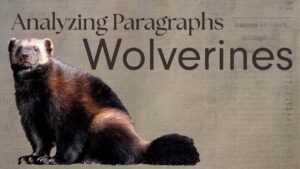
Analyze Paragraphs: Wolverines
Three paragraphs about wolverines. They all cover the same topic — so what makes each one different? Now combine them into one super-paragraph.

A Lunar Survival Mission
A favorite of mine! This task is delightfully complex and ambiguous, forcing students to make choices without enough information and with no right answer. How will they survive on the moon for three days?

Game: Number Scrabble
What if we played Tic-Tac-Toe with numbers and instead of three-in-a-row, we add up to 15? Well… then we’d have Number Scrabble!
Changing Coordinating Conjunctions
What happens when we switch out a “but” with a “so”? An “and” with a “for”? How can such tiny words make such big differences?

Jotto
Who can guess the codeword first?

Word Ladders Introduction
You won’t believe how this spelling and vocabulary puzzle will get kids’ brains sweating over the smallest of words.
Writing A Thanksgiving Letter
What if an inanimate object could express thanks for a special person in your life? What would it write?

Ambiguous Sentences
Rather than just demand that students “write clearly,” we’ll explore the hazards of poorly written sentences… and maybe create one of our own!

Remixing A Holiday Poem
Let’s take a classic Christmas poem and remix it to work with another holiday!

Holiday vs Holiday (from a Mascot’s Perspective)
Want something to do during the holiday season that is both fun and involves thinking? Get students writing about what a snowman would think about Halloween or what a ghost would think about Thanksgiving.

Characters Dressed as Other Characters for Halloween
What if one character dressed up as another for Halloween? Would the Cat in the Hat pick Captain Jack Sparrow, because they’re both chaotic yet good-natured people? Would Elsa dress up as The Ice King since they are both lonely?

Punctuation Power
In a sentence, punctuation may seem meek when compared to those mighty words, but punctuation has incredible power over the meaning of a sentence. Students will try re-punctuating sentences to find new meanings – without changing a single word!

Writing Seuss Style Poetry
Sure, Dr. Seuss wrote for young students, but can older students analyze his writing and learn to mimic his style? THEN, they can produce Seuss-style poetry about any topic: Ancient China, the electromagnetic spectrum, Pride and Prejudice, and (yes) fraction division!

Paragraphs: Systems of Sentences
Blow up a paragraph into individual sentences. Now reassemble it. The clues hiding in each sentence will surprise you.

Not Like The Others: Charlotte’s Web
Four Charlotte’s Web characters. One doesn’t belong. But which one? That depends on your argument.

The Tournament of Biomes
Want to move beyond memorizing the characteristics of biomes? In this lesson, students work through a Tournament of Biomes, explaining which biome wins in each round (based on criteria you choose). In the end, they crown a 👑 Champion Biome!

Advanced Alliteration and Consonance
When students learn about alliteration, it’s hard to steer them away from goofy tongue-twisters. Certainly, there must be more powerful and practical ways of using alliteration. In this lesson, I draw on delicious examples from Shakespeare to show how a very advanced writer used alliteration. Then, I break those ideas down so students can try them out.

Game: Order and Chaos
Imagine Tic-Tac-Toe if both players could play as both Xs and Os!

Bulls and Cows
How quickly can you break the numeric code?

Ghost
Ghost is a word-building game for two players. The first person to create an actual word loses.

Investigating Christmas Trees
Start with facts about Christmas trees. Group them. Label them. Can you boil it all down to one big idea?

Math Curiosity: The Coloring Problem
No video gets me more email from students! How few colors can you use to color in any map so that no two, neighboring regions are the same color?
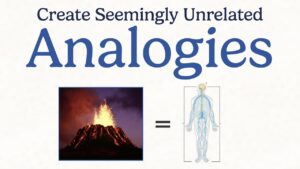
Building Creative Analogies
We’ll take two seemingly unrelated pieces of content (say volcanoes and the human body) and then build analogies to connect the two ideas. In the end, students can create a skit, comic, or story relating the two concepts.

Multiple Meaning Matcher – Introduction
Your students will try to match up definitions that belong to the same homophone in this brain-boggling vocab puzzle.

Create A Civilization Introduction
Your students build a civilization from scratch — rivers, flags, calendars, currency, government. Social studies, science, and writing woven into one year-long project.

Ways to Start a Sentence – Level 1
‘Add more variety!’ teachers say. But how? This lesson gives students actual techniques instead of vague advice.

Greekymon
Rather than just memorizing word parts, students will use those word parts to create four possible products.

Better Stories Part 1: The Big Idea
We open our unit on narrative writing with a big idea: “structure increases creativity.” I show how this is true by bringing in examples from across all disciplines.