“Loving how well organized, thoughtful, and clear every one of your resources are!” ~ a learning specialist

TEKS ELA Standard: 3.6.E

make connections to personal experiences, ideas in other texts, and society

Power can be Visible or Invisible
What are examples of unseen Power? And can invisible power be more powerful than visible power?
Introducing Universal Theme of Change
So what could you do with a Universal Theme of Change? Well, here’s an introduction that will get your students’ brains sweating.
Introducing Universal Theme of Power
So what could you do with a Universal Theme of Power? Well, here’s an introduction that will get your students’ brains sweating.
Generalization: Change Leads to More Change
Can you think of a time in your life when “Change lead to more change?”
Order Can Be Natural or Constructed
When is order natural and when is it designed by people?
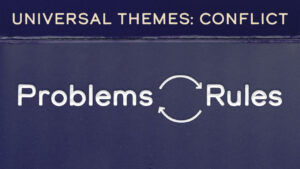
Generalization: Problems Lead to New Rules, Which Lead to New Problems
Students explore this generation about how problems lead to new rules, and new rules lead to new problems.
Generalization: Systems Are Made up of Other Systems
Students will explore how systems are often made up of smaller systems (and are usually a part of a larger system, too).
Invisible Power Can Have Visible Effects
Can you think of times when power is unseen, but we can clearly see its effects?
Content Imperatives: Parallel
Get students thinking broadly by exploring similarities across multiple topics. Combine with Depth and Complexity for bonus points!
Depth and Complexity: ⚖️ Ethics
Want to add drama to any topic? Use the Ethics prompt!
Asynchrony: Developing At Different Rates (For Students)
For students! In some areas, a student may be shockingly advanced, while in others… surprisingly average. This is asynchrony in action.
Think Like An Economist
How would an economist read Goldilocks? How would they see a rainforest? How would they study the American Revolution?