


Playlist: Bookmarks
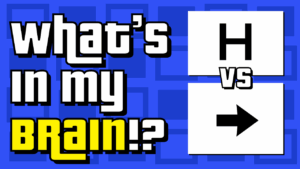
What’s In My Brain: H vs Arrow
Two columns. One is an example, one isn’t. Can you figure out the hidden rule before the big reveal?
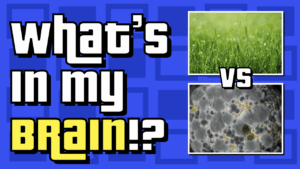
What’s In My Brain: Grass vs Mold
Two columns. One is an example, one isn’t. Can you figure out the hidden rule before the big reveal?

What’s In My Brain: Lion vs Bear
We’re looking at carnivores vs omnivores.

Lipogram: Rewrite “Twinkle, Twinkle”
What if we rewrote a piece of writing without using certain letters?

A Lunar Survival Mission
A favorite of mine! This task is delightfully complex and ambiguous, forcing students to make choices without enough information and with no right answer. How will they survive on the moon for three days?

SCAMPER: Scaffolding Creativity
Asking students to “think creatively” won’t get you far. They won’t know how to start, they’ll get stuck with simple ideas, or they’ll just go completely wild. SCAMPER is a tool for scaffolding the process of creativity.

Parentheses: How big of a change can they make!?
Two tiny parentheses. One expression. How big of a change can they make? Bigger than you think.

Math Curiosity: The Coloring Problem
No video gets me more email from students! How few colors can you use to color in any map so that no two, neighboring regions are the same color?

The Resiliency Tournament
Your students will set up a tournament to determine which person or character best demonstrated resiliency.
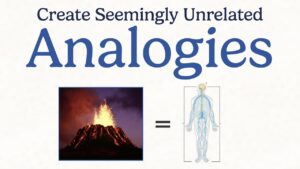
Building Creative Analogies
We’ll take two seemingly unrelated pieces of content (say volcanoes and the human body) and then build analogies to connect the two ideas. In the end, students can create a skit, comic, or story relating the two concepts.

A Donut Investigation
In this cross-curricular investigation, students will look into an intriguing question: do donuts or salads have more sugar? They’ll grapple with misleading information, bias, and use their math skills to create a visual representation of sugar in popular foods.

Create A Creature
Create a new creature based on the adaptations of existing creatures from the same biome.

Greekymon
Rather than just memorizing word parts, students will use those word parts to create four possible products.