


Playlist: Bookmarks
Chaos Can Be Positive or Negative
Sometimes we want order, but sometimes we need chaos!
Introducing Order and Chaos
Introduce Order by exploring “written” vs “unwritten” rules.

Antonym Paths
Does the antonym of an antonym bring us back to the same meaning?

Inferring With Art: A Couple
What’s going on in this room? There are shoes everywhere! Are those… oranges? Let’s make some inferences!
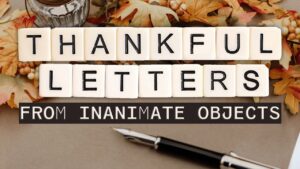
Writing A Thanksgiving Letter
What if an inanimate object could express thanks for a special person in your life? What would it write?

Writing Seuss Style Poetry
Sure, Dr. Seuss wrote for young students, but can older students analyze his writing and learn to mimic his style? THEN, they can produce Seuss-style poetry about any topic: Ancient China, the electromagnetic spectrum, Pride and Prejudice, and (yes) fraction division!

What’s In My Brain: Cute Baby vs Fast Cheetah
Can students spot similes vs metaphors?

Jabberwocky and Context Clues
Context clues lessons can be a disaster. Here, we expose students to a delightful classic packed with nonsense words (“Jabberwocky”) and ask them to decipher the meanings and parts of speech. Then, it’s only natural for students to write their own nonsense poems.

Showing A Character’s Trait
We tell students to ‘show, not tell’ — but that advice is useless until they experience the difference. This lesson makes it click.

Ways to Start a Sentence – Level 1
‘Add more variety!’ teachers say. But how? This lesson gives students actual techniques instead of vague advice.

Better Stories Part 1: The Big Idea
We open our unit on narrative writing with a big idea: “structure increases creativity.” I show how this is true by bringing in examples from across all disciplines.